Tennis enthusiasts spend hours on court each week, yet persistent backhand flaws and inconsistent serves keep their game frustratingly stagnant. Local club directories can suggest nearby coaches and list their hourly rates, but they rarely verify official certifications, share student progress records, or offer trial sessions to gauge compatibility. Compare tennis coaching lessons that feature certified instructors, a free assessment, and periodic video analysis, so you can choose a trainer who truly refines your strokes and elevates your match performance.
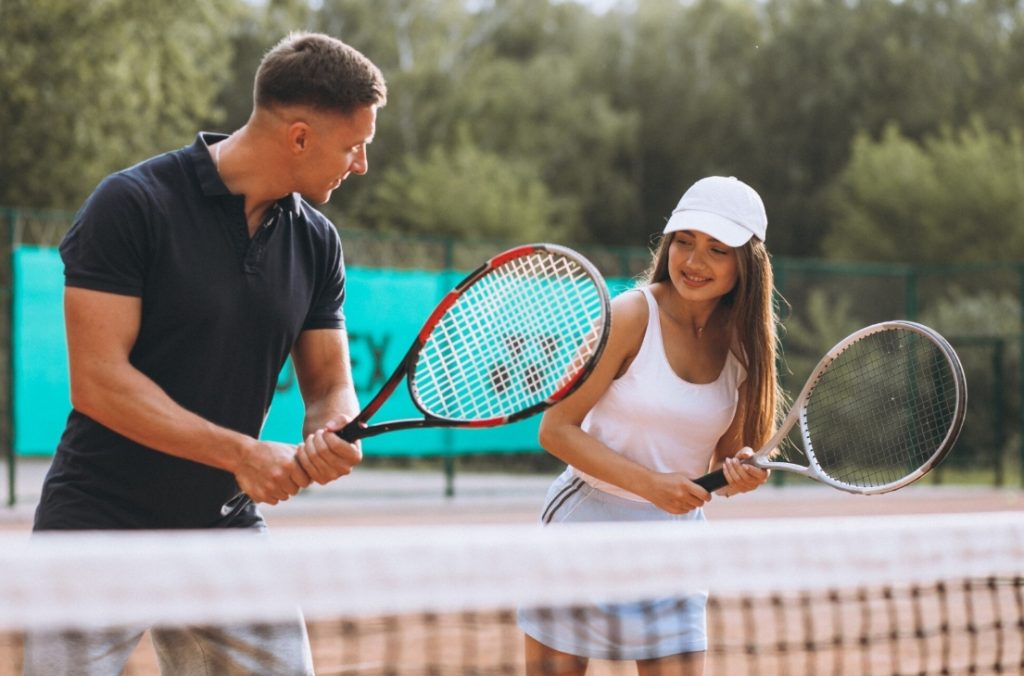
You scroll through your feed and spot a coach with perfect forehand demos and a waitlist a mile long. You book a block of tennis coaching lessons, show up, and spend sixty minutes feeding balls into a basket while the coach counts your unforced errors. No one asks about your match record, no one checks your serve mechanics under fatigue, and no one mentions what happens after the hour ends. You book again next week, and it feels the same. This is the trap of treating private lessons like a commodity. Here is how to flip that script and turn every session into a data-driven evolution, not just a paid workout.
Skill Audit First: Match the Coach to Your Actual Game
A great coach on paper does not mean a great coach for you. The first step is not picking a name from a list; it is running a structured skill audit that benchmarks your current level against what actually happens on match day. This section explains why your starting point determines everything.
The 20-Minute Technical Physical Exam
The first trial session tells you everything. If the coach does not even ask whether you are a baseline grinder or a net rusher and just starts feeding balls, walk away. A real professional spends the first 20 minutes running a full diagnostic. They record your second-serve percentage on both the deuce and ad sides. They measure how many of your rally balls land past the service line during a one-minute baseline exchange. These cold numbers become the real report card for your next ten lessons, not some hollow good job, keep going from the sideline. Coaches who skip this are not measuring; they are guessing.
Match-First Video Session
Before the first on-court session, a serious coach asks for two clips from your recent matches – one point where you constructed a winner and one where you collapsed under pressure. They screen-share with you, freeze the frame, and point out exactly where your shot selection went wrong or why your contact point drifted behind your body. They contrast your match decisions with what they see in practice. This proves they understand your actual competition environment, not just your cooperative drill habits. Any coach who skips this step is treating you as a blank canvas, meaning they have zero idea what you actually need to fix.
The Playing Style Conversation
The coach must ask about your tennis identity. Do you prefer constructing points from the baseline or closing the net? Are you comfortable with slice or do you avoid it? What shot makes you nervous in a tiebreak? These questions shape the entire training plan. If the coach never brings up your match personality, they are training a swing robot, not a competitor.
Closed-Loop Feedback: Make Every Swing Count Twice
On-court feedback evaporates the moment you walk off the court. A modern coaching system builds a video-to-feedback loop that captures your mechanics, analyses them with digital tools, and gives you something concrete to review between sessions. This section lays out how to demand a feedback system, not just a verbal wrap-up.
Video Capture With Visual Overlay After Each Session
Do not be fooled by coaches who toss around phrases like modern tennis biomechanics during the lesson but disappear the second the hour ends. Ask your coach to use a motion analysis tool like Tenniix or similar software to freeze your swing at key frames. A simple drawn line across the footage shows you exactly why your backswing is always half a beat late or why your contact point keeps drifting behind your body. This kind of visual correction is worth more than a hundred blind swings on court. If the coach does not send you an annotated clip within 24 hours of the lesson ending, they are probably just collecting your hourly rate.
Shared Dashboard for Session-to-Session Tracking
The coach should maintain a shared progress board that stores every diagnostic clip, your rating changes, and notes from each lesson. You can access this dashboard before your next session to refresh your mental cues. It also lets you see improvement trends over four, eight, and twelve weeks. When progress stalls, the visual history shows you why. Coaches who only give verbal feedback at the net are leaving half the lesson value on the court.
Robot-Reinforced Repetition Between Lessons
Advanced facilities now combine coaching sessions with programmable ball machines that replicate the specific spin, speed, and depth patterns you struggle with. After the coach corrects your technique, you step over to the robot and hit thirty reps at match tempo with the same ball character. This bridges the gap between understanding a correction and embedding it into muscle memory. Without this repetition bridge, your next lesson starts from scratch instead of building on the last one.
Ecosystem Architect: Beyond the One-Hour Bubble
A coach who only sees you for sixty minutes a week cannot develop your game alone. The best coaches act as ecosystem architects – they connect you to hitting partners, local leagues, and practice environments that test your skills under real pressure. This section shows you how to turn a coach into a resource coordinator, not just a technique provider.
Hitting Partner Matching Based on Your Level
Your coach should maintain a roster of players at or slightly above your rating and facilitate introductions. They know who is looking for a regular practice partner and who pushes the pace in a way that challenges you. To activate this, do the following:
- Ask your coach for a list of three potential partners with similar availability.
- Request a brief note on each player’s style – baseline grinder, serve-and-volleyer, or all-court attacker.
- Schedule a trial hit with one of them within two weeks of your lesson.
A coach who does this is investing in your weekly court time outside the lesson. If they cannot, they are working in isolation, and so are you.
League and Tournament Pathway Advice
A good coach follows the local tournament calendar and recommends which events match your current development stage. They advise on when to step up to a higher division and when to stay put and refine. This prevents the common mistake of playing too far above your level, which crushes confidence, or too far below, which builds bad habits. Ask your coach to map out a three-month competition schedule alongside your lesson plan.
Ecological Drills Over Dead Feeding
Training that transfers to matches must include variable and unpredictable ball feeds. Instead of identical balls to the same spot, the coach uses drills that simulate match contexts – approaching the net after a short ball, defending against a deep rally, or hitting on the run. This follows the ecological dynamics approach, which research shows produces better retention than repetitive closed-skill drilling. If every drill is a static feed to your strike zone, you are training for the ball machine, not for your next opponent.
Sports Science Integration: Protect Your Body and Extend Your Prime
Tennis is brutal on joints, tendons, and shoulders. A coach who ignores load management is trading your long-term health for short-term progress. The final upgrade integrates physiological monitoring into your lesson cycle so you train smarter and stay on court longer. This section covers the health side of a complete coaching ecosystem.
Wearable Sync for Daily Readiness
High-end coaches now request access to your wearable data – heart rate variability, resting heart rate, and sleep score – before adjusting session intensity. If your Oura ring or Apple Watch shows HRV has dropped significantly, a smart coach switches your lesson from high-intensity point play to light technical refinement. To implement this:
- Link your wearable to the coach’s platform or share a weekly summary screenshot.
- Review your HRV trend together at the start of each lesson.
- Agree on a green-yellow-red intensity scale based on your daily readings.
They know that pushing through fatigue does not build resilience; it builds injuries. This is not optional for serious players; it is the new baseline.
Load Monitoring Across the Week
Your coach should track your total court time, including matches, other lessons, and solo practice. When your weekly load exceeds a safe threshold, they reduce the intensity of your private session or add extra recovery drills. Without this tracking, you accumulate micro-trauma that eventually becomes tennis elbow or rotator cuff strain. Ask your coach to show you their load log during your first consultation.
Nutrition and Recovery Protocols
A coach who cares about your longevity asks about your post-session nutrition, hydration, and sleep routines. They recommend simple practices – a protein-carb snack within thirty minutes of finishing, a shoulder-strengthening band routine, and a consistent wind-down schedule. You are not just hiring a swing doctor; you are hiring a health ally.
Conclusion: Invest in a Tennis Partner Who Builds Your Ecosystem
You are not paying for a pleasant hour of casual hitting. You are paying for access to a complete tennis ecosystem – the coach who can connect you with the right hitting partners, the one who maps out your next club league tournament, and the one who actually watches your match footage. Before your next booking, interview your potential coach like a demanding boss. Ask for a video correction sample. Request a clear load monitoring protocol. If they cannot deliver any of these, no matter how polished their Instagram looks, move on. Your wallet, your precious weekend, and your vulnerable tennis elbow all deserve a more professional tennis partner.
Private coaching is about buying a tailored learning process that addresses your unique weaknesses, complements your match responsibilities, and protects your body from burnout. The markers we have discussed are not academic checkboxes. They are practical tools every player can use during the first phone call. The next time you search for tennis coaching, treat that initial chat like a job interview. If they hesitate to show you their diagnostic process, their video history, or their recovery advice, walk away. Your development deserves more than a basket of dead balls and a stopwatch.